Big Tech is no longer lobbying quietly — it is entering state elections directly.
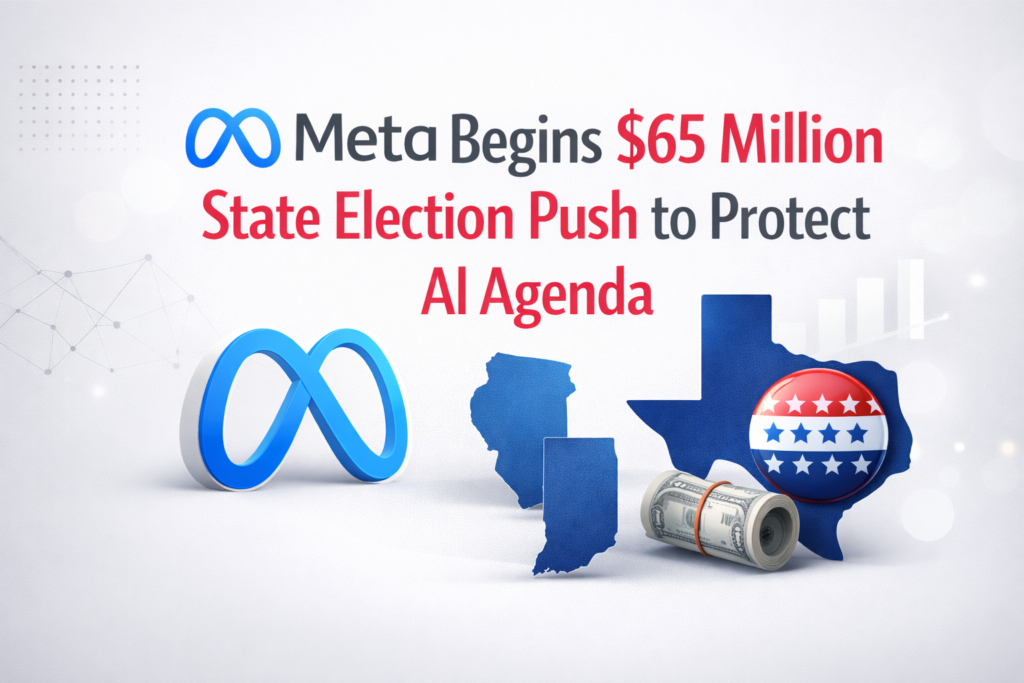
Meta Platforms is preparing to deploy $65 million in state-level election spending, marking the largest political investment in the company’s history.
This is not symbolic participation.
It is a strategic escalation.
The objective is clear: prevent state legislation that could fragment artificial intelligence regulation across the United States.
The first battlegrounds: Texas and Illinois.
Why Meta Is Moving Now
For years, Meta maintained limited political engagement through corporate PAC contributions and executive-level donations.
That restraint is over.
Executives fear a growing “patchwork regulation” environment, where individual states impose differing AI laws that could:
- Increase compliance costs
- Slow model deployment
- Complicate data center expansion
- Reduce U.S. competitiveness
Instead of waiting for federal pre-emption, Meta is influencing who writes the rules.
The Bipartisan Super PAC Structure
Meta quietly launched two new super PACs:
- Forge the Future Project — Supporting Republican candidates
- Making Our Tomorrow — Supporting Democratic candidates
These join previously funded entities:
- American Technology Excellence Project
- Mobilizing Economic Transformation Across California
The structure is deliberate.
This is not partisan politics.
It is regulatory alignment politics.
Texas: Data Centers and Infrastructure Tensions
Texas represents more than a political test — it is an infrastructure hub.
Meta has three AI data center projects underway in the state.
When local officials in Hood County considered a moratorium on new data centers, State Senator Paul Bettencourt threatened legal action.
That incident illustrates the broader risk:
AI infrastructure now collides with local governance.
Forge the Future Project will fund advertising and voter mobilization to protect pro-technology legislators.
Illinois: Energy, Regulation, and Strategic Positioning
In Illinois, Meta recently secured power from a nuclear plant to support its AI operations.
The state legislature, under Governor JB Pritzker, has advanced AI-related regulations.
Making Our Tomorrow will back Democratic incumbents and candidates viewed as innovation-friendly.
The message is clear:
Regulatory certainty matters more than party affiliation.
Why State Elections Matter More Than Federal Debate
State legislative races are cheaper and more influence-efficient.
$65 million can reshape multiple chambers.
While some tech leaders advocate for federal legislation overriding state AI laws, Meta is hedging its position:
Win the states first.
Shape the rulemakers directly.
The Bigger Signal: AI Has Become a Political Asset Class
Artificial intelligence is no longer just a technological race.
It is now:
- A regulatory battlefield
- A capital allocation issue
- A geopolitical competitiveness factor
- A state-level electoral variable
Meta’s move suggests executives believe regulatory risk now rivals technical risk.
That shift is profound.
Conclusion: The Regulation War Is Moving Down Ballot
The AI debate is often framed around Washington.
Meta’s strategy reframes it around state capitols.
If successful, this model could redefine how technology companies engage politically — not as reactive lobbyists, but as proactive electoral investors.
This is not just campaign spending.
It is regulatory architecture building.