How Convicted Money Quietly Found Its Way Into the Foundations of Modern Tech
The money that never stopped moving
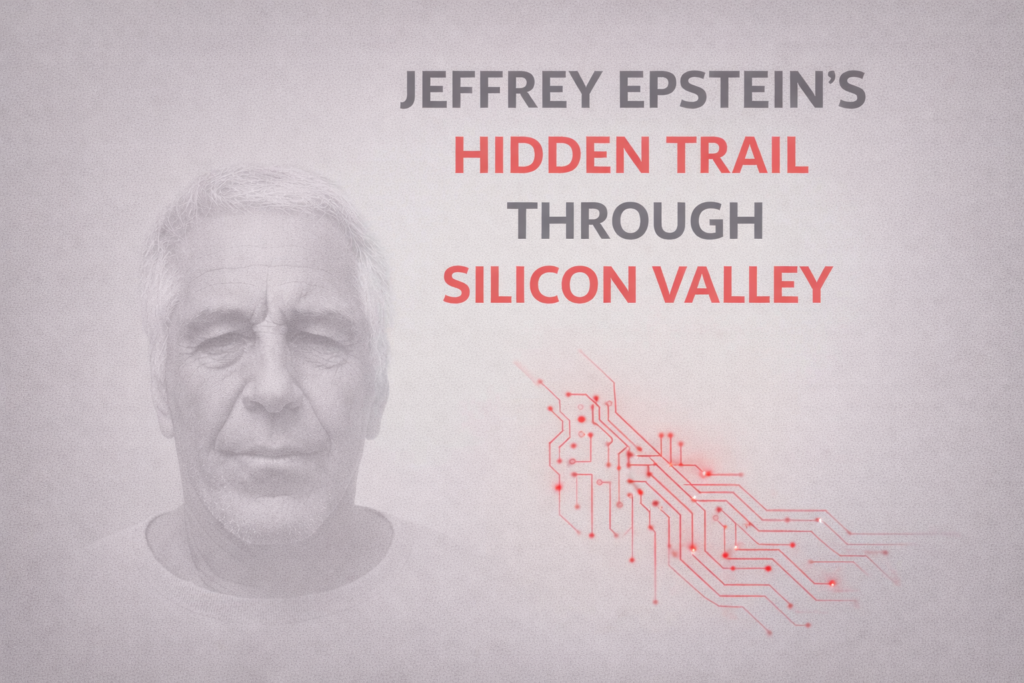
For years after his 2008 conviction, Jeffrey Epstein was treated in public as a disgraced financier whose influence had supposedly collapsed. Behind the scenes, however, his money never stopped working.
Newly released U.S. Justice Department documents reveal how Epstein quietly embedded himself into Silicon Valley’s most promising start-ups, venture funds, and deal pipelines — not merely as a social presence, but as a strategic investor chasing access, legitimacy, and long-term returns.
This was not accidental. Epstein actively sought proximity to innovation, founders, and capital gatekeepers, using wealth as leverage in an ecosystem that often prioritizes growth over scrutiny.
Coinbase: when growth outweighed reputation
In 2014, Coinbase was a young crypto start-up, just two years old and hungry for capital. That year, Epstein invested $3 million into the company — despite already being a convicted sex offender.
Internal emails show that Coinbase’s leadership was aware of who Epstein was. Yet the deal proceeded.
That investment would later generate multimillion-dollar returns as Coinbase grew into one of the world’s largest cryptocurrency exchanges. The case illustrates a recurring pattern: moral risk discounted in favor of financial upside.
Coinbase has declined to comment on the matter.
A network built on access, not innovation
Epstein’s Silicon Valley strategy was not about building companies — it was about being positioned near them.
Documents show he:
- Invested heavily in Jawbone, eventually committing over $11 million
- Sought exposure to Palantir, Spotify, and SpaceX
- Placed $40 million into Valar Ventures, Peter Thiel’s venture capital firm
- Used Deutsche Bank connections to access elite deal flow
In many cases, Epstein did not close the deals himself. Instead, he leveraged advisers, venture partners, and intermediaries — insulating his identity while keeping influence intact.
The role of venture capital silence
Perhaps the most uncomfortable revelation is not Epstein’s persistence — but the industry’s accommodation.
Venture capitalists, founders, and advisors continued facilitating introductions, meetings, and pitches long after Epstein’s crimes were public knowledge. In some cases, steps were taken to obscure his identity, using intermediaries, special purpose vehicles, or vague fund structures.
Emails show explicit concern that founders might “Google the name” — and solutions were discussed to prevent that.
This was not ignorance. It was risk management.
Jawbone: money, collapse, and retaliation
Jawbone offers a darker chapter.
After the company failed and liquidated in 2017, Epstein reportedly:
- Threatened legal action against its founder
- Hired a private investigator to seek damaging information
- Used his financial leverage as a tool of pressure
The episode highlights a critical truth: capital is power long after a startup dies.
SpaceX, prestige, and proximity to power
Epstein’s pursuit of SpaceX underscores his obsession with proximity to historical relevance.
He toured SpaceX facilities, discussed investments through intermediaries, and sought access via Deutsche Bank and venture firms. While it remains unclear whether he ever invested directly, the intent is unmistakable.
He wanted proximity to technological legacy, not just financial returns.
The illusion of distance
Many prominent figures later claimed limited involvement or regret. Some said they “barely knew him.” Others emphasized the lack of direct business ties.
But the documents suggest a different reality: Epstein’s presence was normalized, tolerated, and at times strategically useful.
This was not a failure of one company — it was a systemic failure of governance, ethics, and accountability.
What Silicon Valley must confront
The Epstein files force an uncomfortable reckoning:
- How much “tainted capital” is embedded in modern tech?
- How often does innovation excuse ethical compromise?
- And how many similar figures operate today — less visible, more careful, equally protected?
Silicon Valley prides itself on disruption. Yet when it came to Epstein, the system behaved predictably: money spoke, and silence followed.
Final reflection
Jeffrey Epstein did not need to build technology to influence it. He needed only access — and Silicon Valley provided it.
The question now is not what Epstein did.
It’s why so many doors remained open.