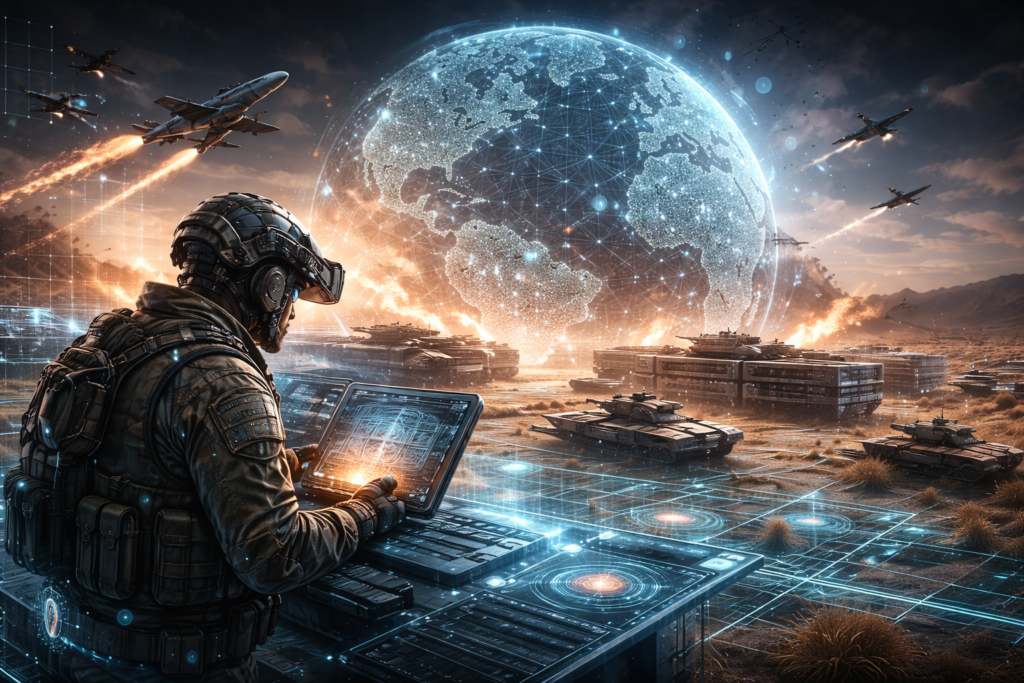
Cyberwarfare Moves From the Shadows to the Battlefield
For decades, cyber operations were treated as discreet tools — used quietly to sabotage infrastructure, spy on adversaries, or disrupt hostile networks from afar. That paradigm is changing. The U.S. Department of Defense is now actively integrating cyberweapons into real-world military operations, positioning computer warfare as a core element of modern combat.
Recent operations in Venezuela and during strikes on Iranian nuclear facilities illustrate how cyber capabilities are no longer isolated actions but coordinated components of broader military strategies.
Integrating Cyber Effects With Conventional Military Power
According to U.S. officials, American cyber forces were used in Venezuela to disrupt power grids, disable radar systems, and interfere with military communications. These actions were not carried out in isolation. Instead, they were synchronized with physical troop movements to reduce detection and increase operational effectiveness.
This approach reflects a broader Pentagon strategy: layering cyber effects alongside kinetic force to degrade an adversary’s ability to respond in real time. By targeting command-and-control systems, cyber operations can create temporary windows of vulnerability that conventional forces can exploit.
A Shift in Pentagon Doctrine
Katherine E. Sutton, the Pentagon’s top cyberpolicy official, has emphasized that cyber capabilities are now being woven directly into operational planning rather than treated as separate tools. The objective is precision — enabling targeted strikes, disrupting decision-making processes, and weakening an opponent’s situational awareness without relying solely on physical force.
This integrated doctrine marks a turning point. Cyberwarfare is no longer just about hacking networks; it is about shaping the battlefield itself.
Lessons From Venezuela and Iran
The Pentagon’s recent tests demonstrate how cyber operations can amplify traditional military actions. In Venezuela, disabling radio transmissions and power infrastructure reportedly made it significantly harder for local forces to identify or engage U.S. personnel. Similar integration was tested during strikes on Iranian nuclear facilities, reinforcing the Pentagon’s confidence in combining cyber and kinetic tactics.
While critics have debated how decisive these cyber actions were on their own, defense officials argue that their true value lies in coordination. Cyberweapons are most effective when used in tandem with intelligence, surveillance, and conventional military assets.
Global Competition in Cyber Capabilities
The United States is not alone in advancing cyberwarfare. China has demonstrated the ability to penetrate critical U.S. infrastructure through operations such as Volt Typhoon, which aimed to disrupt systems near American military bases in the Pacific.
What differentiates U.S. strategy, however, is its emphasis on simultaneous execution — deploying cyber effects at the same time as physical military operations. This fusion represents a significant evolution in how wars may be fought in the future.
Cyber Command 2.0 and the Talent Challenge
To support this shift, the Pentagon is restructuring U.S. Cyber Command under what officials describe as “Cyber Command 2.0.” The initiative focuses on building deep technical expertise rather than generalist career paths.
Specializations in areas such as cloud computing, industrial control systems, and artificial intelligence are now seen as critical. Retaining top cyber talent remains a challenge, particularly as private industry offers lucrative alternatives, but the Defense Department believes that more flexible career models can help close that gap.
Redefining Warfare in the Digital Age
As cyber operations become inseparable from physical military power, the nature of warfare itself is evolving. Cyber is no longer just a supporting capability — it is a force multiplier that can shape outcomes before the first shot is fired.
The Pentagon’s integrated approach signals a future in which wars are fought not only with missiles and troops, but with code, data, and control over information itself.