Artificial intelligence is reshaping early cancer detection — and China has become one of its most ambitious testing grounds. A Diagnosis That Arrived Before Symptoms Three days after a routine medical exam for diabetes, Qiu Sijun, a 57-year-old retired construction worker in eastern China, received an unexpected phone call.The caller was not his usual doctor, but the head of the hospital’s pancreatic department. He was asked to return immediately. “I knew it couldn’t be good news,” Qiu later recalled. The diagnosis confirmed his fear: pancreatic cancer — one of the deadliest and hardest-to-detect forms of the disease. Yet there was a crucial difference from most cases. The tumor had been discovered early, before symptoms appeared, allowing surgeons to remove it successfully. The detection was not made by a doctor alone, but by an artificial intelligence system quietly analyzing routine CT scans in the background. Why Pancreatic Cancer Is So Hard to Catch Pancreatic cancer has one of the lowest survival rates among major cancers, with a five-year survival rate of roughly 10%. The reason is brutally simple: symptoms usually appear only after the disease has advanced. Widespread screening is discouraged because confirmatory tests, such as contrast-enhanced CT scans, expose patients to significant radiation. Safer alternatives, like non-contrast CT scans, produce less detailed images, making early abnormalities difficult for radiologists to identify. This diagnostic gap has persisted for decades — until artificial intelligence entered the equation. How AI Learned to See What Humans Miss At the Affiliated People’s Hospital of Ningbo University, doctors began testing an AI system called PANDA (Pancreatic Cancer Detection with Artificial Intelligence). Developed by researchers affiliated with Alibaba’s DAMO Academy, the system was trained to detect pancreatic tumors using non-contrast CT scans. To overcome the lack of image clarity, researchers manually annotated contrast-enhanced scans from over 2,000 confirmed pancreatic cancer patients. These annotations were algorithmically mapped onto corresponding non-contrast scans, allowing the AI to learn subtle visual patterns invisible to the human eye. When tested on more than 20,000 non-contrast CT scans, the model correctly identified pancreatic lesions in 93% of confirmed cases, according to a study published in Nature Medicine. Since late 2024, PANDA has analyzed over 180,000 routine CT scans at the Ningbo hospital, helping detect nearly two dozen pancreatic cancer cases — 14 of them at an early stage. China’s Rapid Push to Apply AI in Medicine China’s healthcare system offers a unique environment for AI experimentation. Large patient volumes, widespread use of routine imaging, and close collaboration between hospitals and major technology companies allow systems like PANDA to be tested at scale. In April, Alibaba announced that the U.S. Food and Drug Administration granted PANDA “breakthrough device” designation, accelerating its review process for potential commercialization. While similar AI-assisted detection efforts exist in other countries, China’s ability to deploy such tools quickly has turned hospitals into real-world laboratories for medical AI. The Risks: False Alarms, Trust, and Infrastructure Despite its promise, PANDA is not without controversy. Since deployment, the system has flagged roughly 1,400 scans as high-risk, but only about 300 required further medical follow-up. False positives can cause anxiety, unnecessary testing, and invasive procedures. Medical experts caution that AI tools must reduce false alarms before they can be widely adopted. Others note that such systems may benefit hospitals with fewer specialists more than elite medical centers. There are also practical challenges. Outdated hospital hardware has struggled to process large AI models, and staff shortages limit the ability to follow up with every flagged patient. In some cases, the system has even crashed under heavy computational loads. A Tool — Not a Replacement Doctors involved in the project emphasize that PANDA does not replace specialists. It serves as a second set of eyes, reviewing scans already ordered for other reasons and highlighting cases that might otherwise go unnoticed. For patients like Qiu, the technology made all the difference. “I don’t use AI, and I don’t really understand how it works,” he said after his recovery. “But the doctor told me I was lucky. All I could feel was relief.” The Future of Early Detection The success of PANDA illustrates both the potential and the complexity of AI-driven medicine. Detecting cancer earlier can save lives — but it also raises ethical, technical, and social questions that healthcare systems around the world will need to confront. As AI continues to mature, its greatest impact may not come from replacing doctors, but from quietly changing when — and how — life-threatening diseases are discovered. Sources & References

Mega da Virada Draw Delay Triggers Complaints and Highlights Operational Failures
The delay of Brazil’s Mega da Virada lottery draw, offering a record R$1.09 billion prize, sparked public backlash and exposed operational issues at Caixa Econômica Federal.
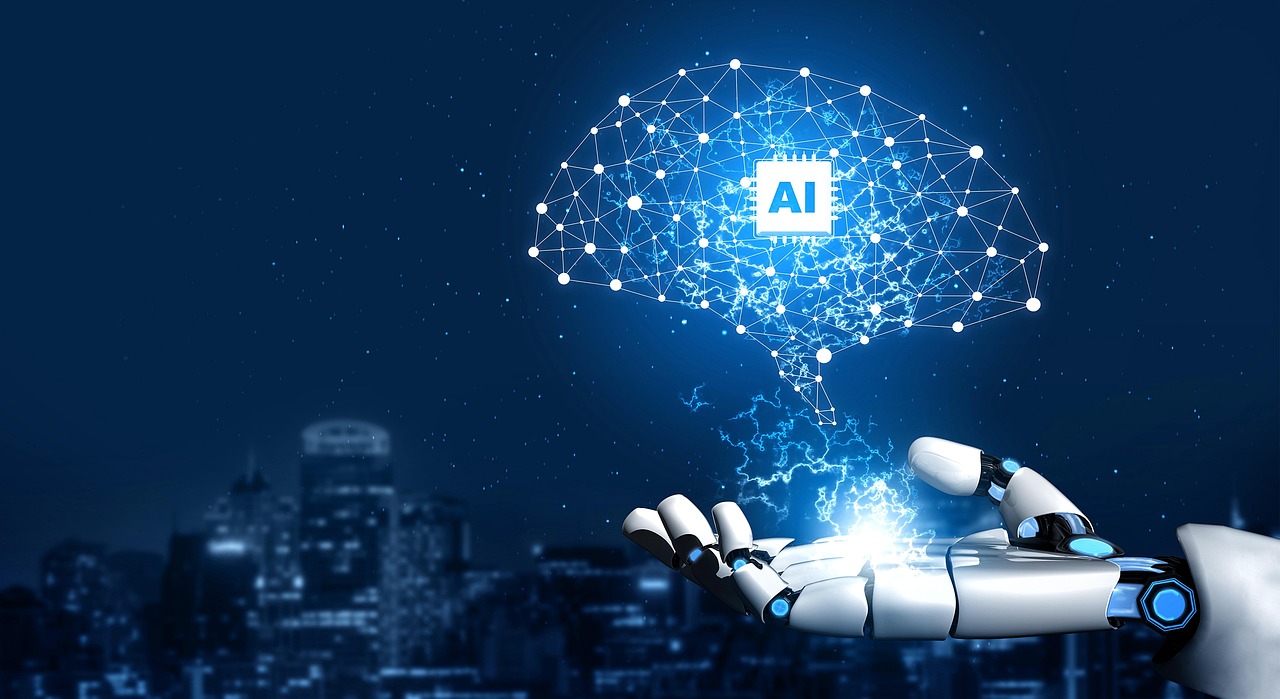
Even the Sky May Not Be the Limit for AI: Orbital Data Centers as the Next Frontier
As artificial intelligence accelerates, Earth’s energy and land face growing pressure. Discover how orbital data centers could redefine sustainable AI infrastructure.

The New AI Elite: Real Billionaires or Paper Wealth?
The AI boom is creating fortunes — but for how long? Artificial intelligence has firmly established itself as one of the most disruptive forces in modern technology. In just a few years, the race to build models, infrastructure, and AI-powered applications has produced a new generation of extremely wealthy founders — many of them under 40. But alongside this rapid rise comes an unavoidable question: are these fortunes truly solid, or are we witnessing another technology bubble driven by inflated expectations? In 2025, the landscape echoes earlier moments in Silicon Valley history, particularly the dot-com boom of the late 1990s. The difference this time is speed. Billionaires almost overnight For past tech icons, reaching billionaire status took decades. Today’s AI founders often reach that milestone in less than three years, fueled by aggressive funding rounds following the release of ChatGPT and the surge in AI investment. Several startups — some still without mature or widely adopted products — have reached multi-billion-dollar valuations, turning equity stakes into massive wealth, at least on paper. Among them are companies such as: What these companies share is not just innovation, but a market betting heavily on future potential rather than present results. Paper wealth is not guaranteed wealth Seasoned investors are already issuing a clear warning: valuation is not the same as real value. Much of the new AI wealth depends on: As one Silicon Valley venture capitalist put it, the real test will be determining which companies endure — and which founders remain billionaires only on paper. History suggests that in every major tech boom, many rise quickly, but only a few remain standing. Youth, concentration, and familiar patterns Another striking aspect of this new AI elite is how closely it mirrors past tech cycles: Despite its transformative promise, AI has not broken these patterns. It has simply accelerated them. This concentration raises broader questions about: When innovation turns into euphoria None of this suggests that artificial intelligence is a passing trend. The technology itself is real, powerful, and already reshaping entire industries. The risk lies in confusing: When startups reach billion-dollar valuations before proving sustainable business models, markets begin to operate on promises rather than performance — a dynamic with a familiar ending. A boom still waiting to be tested The new AI elite may indeed become the next generation of global technology leaders. But that outcome is far from guaranteed. In the end, the real measure of success will not be funding rounds or headline valuations, but: Until then, the AI boom will continue to generate spectacular fortunes — and equally significant doubts. Reference This article is based on a critical analysis of the original reporting: “The New Billionaires of the A.I. Boom”The New York Times, December 2025.

AI-Related Attacks Surge in 2025 — and the Problem Isn’t the Technology
The rise in incidents exposes human misuse, not flaws in artificial intelligence In 2025, incidents involving artificial intelligence systems have increased noticeably. Data leaks, exposed credentials, and poorly secured applications are becoming more common in environments that rely on AI-powered tools. At first glance, it may seem like the technology itself is failing.But a closer look reveals a different reality. The problem is not the AI agents.The problem is how people are using — and selling — them. When powerful systems are copied without understanding Advanced AI systems are now easier than ever to replicate. Prebuilt templates, automation tools, and step-by-step tutorials allow almost anyone to deploy applications that appear sophisticated on the surface. The issue begins when those copying these systems do not understand what they are copying. Behind every AI-powered interface lies a complex structure involving data flows, access permissions, credentials, and logging mechanisms. When these elements are duplicated blindly, mistakes are duplicated as well — and quietly propagated. The result is a system that works just enough to be sold, but not enough to be trusted. Selling products without knowing how they work Many of these copied AI systems are quickly packaged and sold as finished products. The marketing is confident. The promises are bold. The technical foundation, however, is often fragile. In many cases, sellers cannot answer basic questions such as: Without clear answers, there is no real security.There is only trust — and trust alone does not protect data. Data exposure caused by negligence, not sophisticated attacks Most of the recent incidents attributed to “AI attacks” are not the result of advanced hackers exploiting novel vulnerabilities. They are the result of carelessness and lack of technical knowledge. Common issues include: In many cases, nothing was breached.The systems were simply never secured in the first place. AI accelerates capability — not responsibility AI agents are powerful tools. They automate tasks, connect systems, and operate at a scale that was previously difficult to achieve. But artificial intelligence does not eliminate technical complexity.It merely hides it. When people mistake abstraction for simplicity, risk grows silently. The system appears to function, while vulnerabilities remain invisible — until data is exposed. Technology moves fast.The maturity of its users does not always keep pace. The real warning of 2025 What we are seeing in 2025 is not a failure of artificial intelligence. It is a warning. Advanced systems are being placed in the hands of individuals who do not understand their limits, their responsibilities, or their consequences. As long as complex AI-based tools continue to be copied, sold, and deployed without proper technical knowledge, sensitive data will remain at risk. Not because of artificial intelligence —but because of how humans choose to use it.