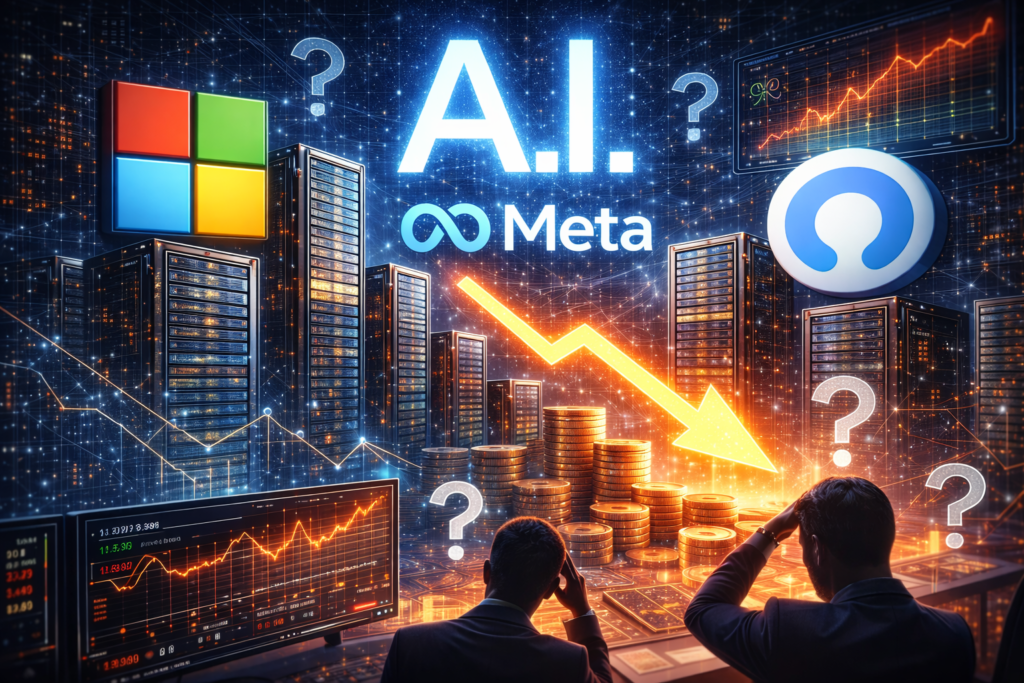
The artificial intelligence boom shows no signs of slowing down. Tech giants are pouring unprecedented amounts of capital into AI infrastructure, betting that today’s massive investments will define tomorrow’s digital economy. Yet, despite the scale of spending, investors remain uneasy about one critical question: when will the payoff truly arrive?
Over the past year, artificial intelligence has evolved from a promising innovation into a core pillar of Big Tech’s strategy. Microsoft, Meta and other industry leaders are aggressively expanding data center capacity, securing specialized hardware and acquiring AI startups — all in an effort to stay ahead in an increasingly competitive landscape.
Microsoft’s latest earnings report illustrates this tension clearly. The company spent $37.5 billion on capital expenditures in a single quarter, a year-over-year increase of roughly 65 percent. Much of that investment went directly into AI-focused data centers, as demand for computing power continues to exceed supply. While revenue and profits exceeded Wall Street expectations, the company’s stock declined, reflecting investor concerns about the pace at which these investments translate into tangible AI-driven growth.
Meta, by contrast, has so far enjoyed a warmer reception from markets. The company announced plans to spend between $115 billion and $135 billion on capital expenditures this year — nearly double what it invested last year. Investors reacted positively, encouraged by signs that Meta’s AI initiatives are already strengthening its core advertising business, offering a clearer link between rising costs and improved financial performance.
Still, the broader picture remains uncertain. Data centers require not only massive upfront capital, but also long-term commitments to energy, infrastructure and scarce materials such as copper and silver. Rising commodity prices could push AI infrastructure costs even higher, extending the timeline for profitability.
Executives themselves are signaling caution. Microsoft has acknowledged that hardware constraints are limiting how quickly its AI services can scale, while Meta’s leadership has framed its current AI models as stepping stones rather than finished breakthroughs. The implication is clear: the most transformative returns from AI may still be years away.
For investors, patience is being tested. The central question is no longer whether AI will reshape industries — that much seems inevitable — but how long companies can sustain compressed margins while waiting for returns. As earnings season continues, markets will closely scrutinize not just how much Big Tech spends on AI, but how convincingly it can explain the road to profitability.
The AI boom is real. Its payoff, however, remains a work in progress.