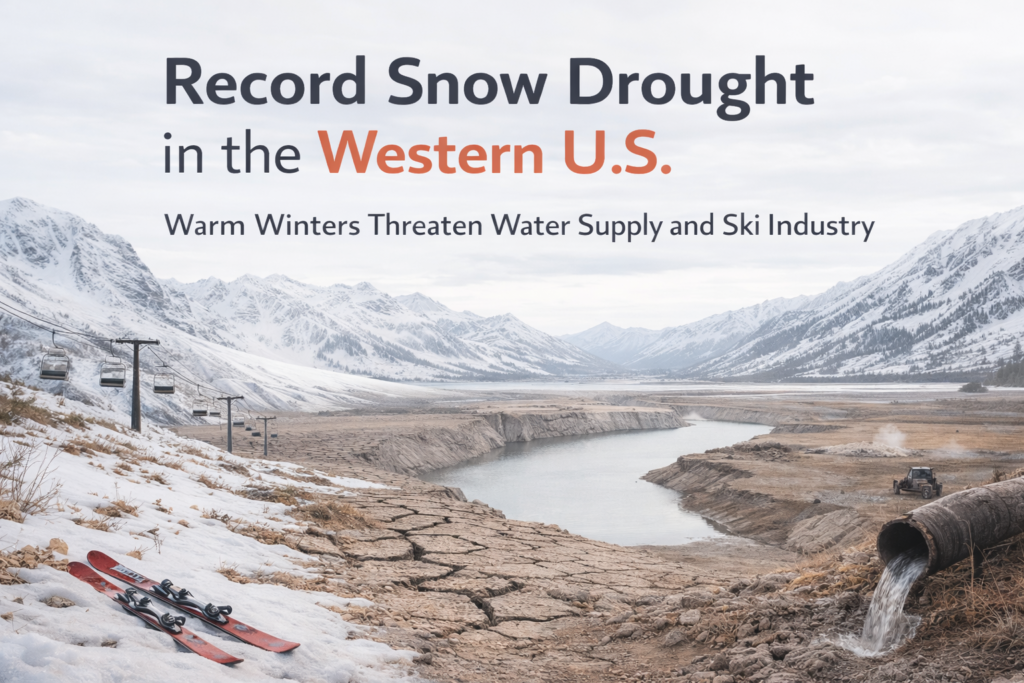
While large parts of the United States are experiencing record snowfall and freezing temperatures, much of the Western region is facing the opposite extreme. An unprecedented snow drought, combined with unusually warm winter weather, is reshaping landscapes, disrupting industries, and raising serious concerns about water availability for the year ahead.
In areas long known for deep, reliable snowfall — including Park City, Utah; Vail, Colorado; and central and eastern Oregon — mountains that should be buried under feet of snow are instead marked by bare ground or only a few inches of coverage. The extent of snow-covered terrain across the West is now at a record low.
Instead of skiing and snowmobiling, residents and visitors in many regions are hiking and biking in temperatures reaching the 50s and 60s, conditions that are highly unusual for mid-winter.
Why Snowpack Matters More Than It Seems
Beyond recreation, mountain snowpack plays a critical role in the Western United States’ water system. Snow acts as a natural reservoir, storing water during winter and gradually releasing it through spring and summer. That runoff supplies drinking water to millions of people, irrigates farmland, replenishes reservoirs, and sustains rivers and ecosystems.
This year’s dramatic decline in snowpack, particularly in the Colorado Rockies and across the Colorado River Basin, adds pressure to a region already deep into a 26-year megadrought. Water levels in the Colorado River’s two largest reservoirs remain dangerously low, intensifying ongoing negotiations between Upper and Lower Basin states over future water management.
Unusual Warmth and Rain Replace Snow
From early December through mid-January, temperatures across the Rockies, the Cascades, and the Sierra Nevada rose as much as 15 degrees above normal. Colorado is experiencing its warmest winter since records began in 1895.
In many locations, precipitation that would normally fall as snow instead arrived as rain — triggering flooding and accelerating snowmelt. In Oregon, one of the hardest-hit states, ski resorts are struggling to remain operational.
At Mt. Bachelor near Bend, Oregon, snow depth at the base has dropped from 109 inches last year to just 27 inches this season. Thin coverage has forced the resort to shut down several ski lifts, reflecting a broader crisis across the winter sports industry.
Economic and Environmental Impacts
The snow drought is taking a measurable toll on the West’s $5 billion ski industry. Vail Resorts reported that in December, only 11 percent of its Rocky Mountain terrain was open, with snowfall 60 percent below average.
Artificial snowmaking has helped some resorts stay open, particularly at lower elevations, but it comes with limitations. Man-made snow tends to be icier and lacks the powder quality skiers expect, altering both safety and experience.
Beyond tourism, the implications are far more serious. Agriculture depends heavily on predictable snowmelt, especially in states like Utah, where up to 95 percent of water supplies originate from snowpack. Low runoff threatens irrigation, crop yields, and even winter wheat survival, which relies on snow to insulate seeds from extreme cold.
Is Climate Change the Whole Story?
Scientists caution that it is difficult to attribute this winter’s snow drought entirely to climate change. However, the patterns are consistent with long-term warming trends. As temperatures rise, more winter precipitation falls as rain rather than snow, and the elevation at which snow can accumulate continues to climb.
Weather models suggest these conditions may become more frequent. Researchers warn that even small shifts in snowfall timing and location can significantly disrupt water systems that millions rely on.
Still, experts note that winter is far from over. February, March, and even April often deliver the bulk of mountain snowfall. Unexpected late-season storms have reversed bleak outlooks in the past — a reminder that uncertainty remains part of the equation.
A Precarious Year Ahead
With water resources, agriculture, ecosystems, and entire regional economies tied to snowfall, the current snow drought represents more than a seasonal anomaly. It underscores the growing vulnerability of the Western United States to climate variability and long-term drought.
Whether the region experiences a late-season recovery or faces another year of strained water supplies, one reality is clear: snow, once taken for granted, has become one of the West’s most closely watched and fragile resources.