Introduction
As companies grow, processes become more complex and interactions multiply. Over time, something critical is often lost: clarity of the journey. Whether it is the customer journey, the employee journey, or an internal operational journey, the absence of structured journey management leads to friction, rework, hidden costs, and inconsistent experiences.
Journey management exists to solve exactly this problem. More than mapping steps, it aligns strategy, processes, people, and technology to ensure that every interaction has purpose, flow, and measurable impact.
In this article, we explore a real and common business problem, explain the fundamentals of journey management, and show how a process-oriented approach — such as the one applied by Goat — helps organizations transform fragmented journeys into structured, scalable, and results-driven experiences.
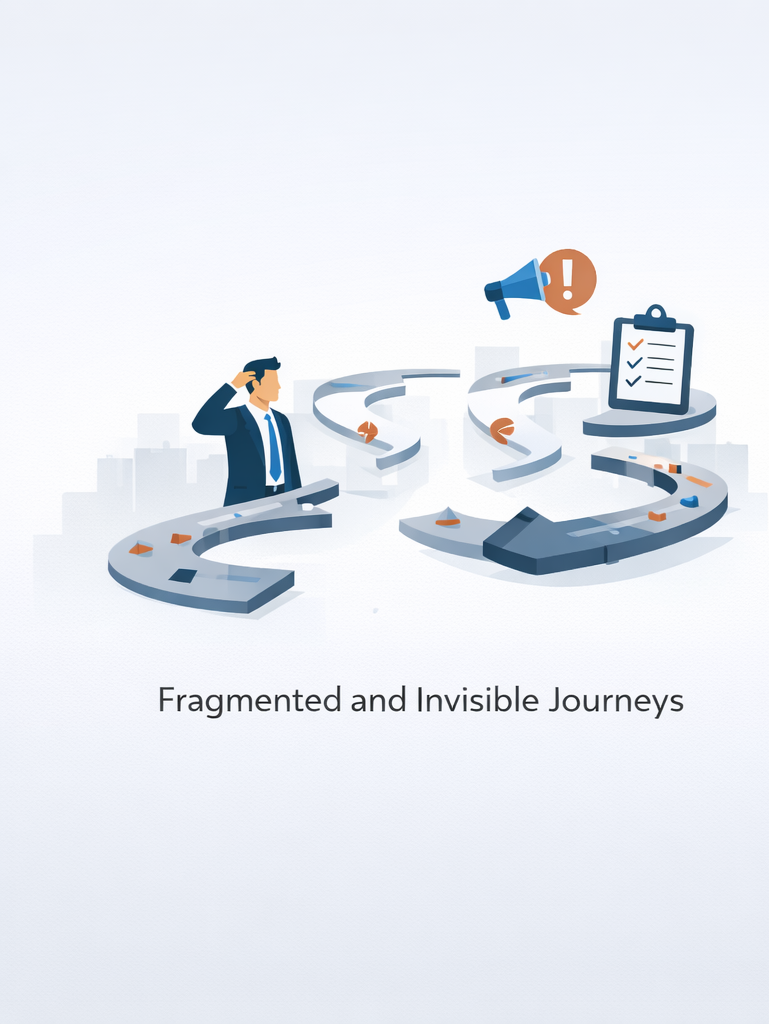
The Real Problem: Fragmented and Invisible Journeys
Many organizations invest heavily in marketing, sales, and digital tools, yet still face:
- Low customer satisfaction after purchase
- Internal teams overloaded with manual work
- Processes that depend on improvisation
- Lack of reliable data for decision-making
In most cases, the issue is not isolated within one department — it is embedded in the entire journey.
Each team manages only its own segment:
- Marketing focuses on acquisition
- Sales focuses on conversion
- Operations focuses on delivery
- Support focuses on problem resolution
Without journey management, these stages operate in silos. The result is a broken experience for customers and inefficiency for the business.
What Is Journey Management?
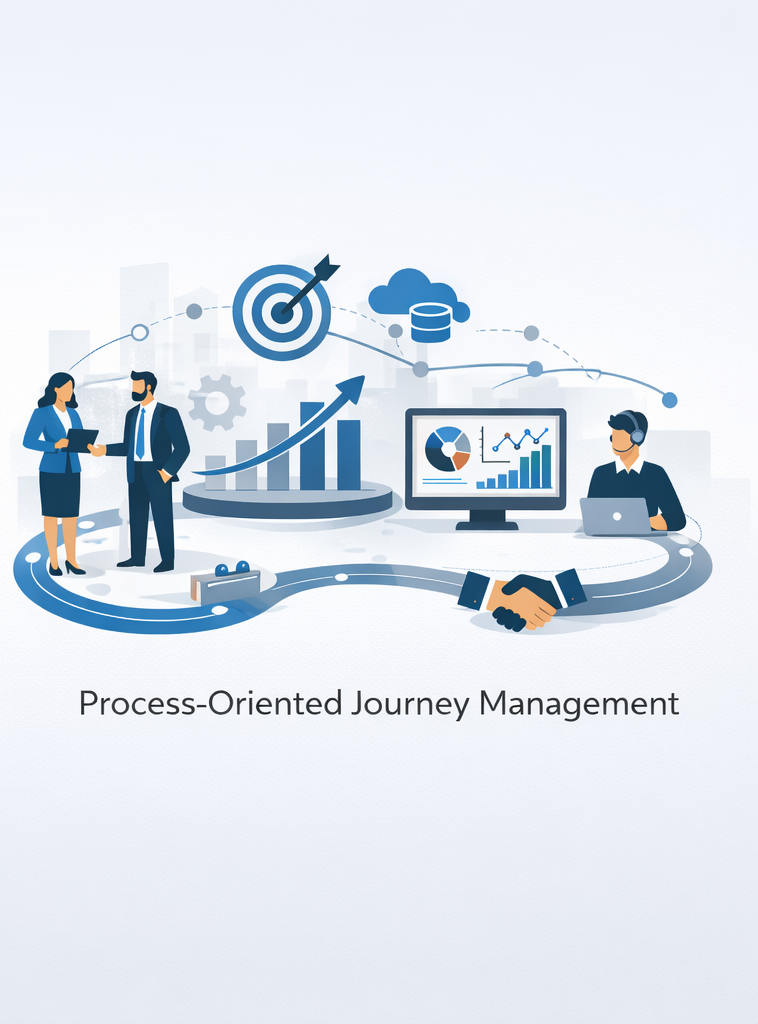
Journey management is the discipline of designing, organizing, monitoring, and continuously improving all stages a user, customer, or employee goes through, from the first interaction to post-experience.
It is built on three core pillars:
- Journey Mapping
Clear identification of stages, touchpoints, responsibilities, inputs, and outputs. - Process Management
Structuring the activities that sustain the journey, eliminating bottlenecks, redundancies, and operational risks. - Governance and Continuous Improvement
Defining KPIs, ownership, and data-driven improvement cycles.
In other words, journey management is not about creating diagrams — it is about making journeys work consistently in real operations.
Where Most Companies Fail
A common mistake is treating journey management as a one-time initiative:
- A single workshop
- A static map that never leaves a slide deck
- An initiative disconnected from daily operations
Without integration into processes, systems, and people, the journey becomes merely conceptual.
Another frequent failure is focusing only on the external customer journey while ignoring the internal journey. Poorly structured internal processes always surface as negative customer experiences.
The Solution: Process-Oriented Journey Management
The solution is to treat the journey as a strategic business asset.
In practice, this means:
- Aligning journeys with business strategy
- Translating each stage into executable processes
- Defining roles, responsibilities, and performance indicators
- Using technology as an enabler — not as the starting point
At Goat, journey management is always developed together with process management, ensuring that what is designed can be executed, measured, and improved over time.
How Goat Applies Journey Management in Practice
Our approach is based on a simple principle:
There is no efficient journey without well-managed processes.
Our method includes:
- Journey Diagnosis
We analyze the real current state, identifying friction points, rework, delays, and inefficiencies. - Future-State Journey Design (To-Be)
We define how the journey should operate, aligned with strategic objectives and customer expectations. - Process Structuring and Optimization
Each journey stage is supported by clear processes, governance rules, and performance metrics. - Implementation and Continuous Monitoring
We support execution, enable teams, and monitor results to ensure sustainable improvement.
The Results of Structured Journey Management
Organizations that manage journeys through a process-driven approach achieve:
- Lower operational costs
- Higher customer satisfaction and retention
- Greater predictability and control
- Increased team productivity
- Data-driven decision-making
More than improving experience, they build mature, efficient, and scalable organizations.
Conclusion
Journey management is not a trend — it is a response to the growing complexity of modern businesses.
When journeys and processes are aligned, companies stop reacting to problems and start orchestrating experiences with clarity, control, and purpose.
At Goat, we help organizations transform fragmented journeys into structured, efficient, and measurable experiences — always with a practical, strategic, and sustainable mindset.
If your company is growing but struggling to manage its journeys effectively, this may be the right moment to rethink processes and take the next step in operational maturity.